
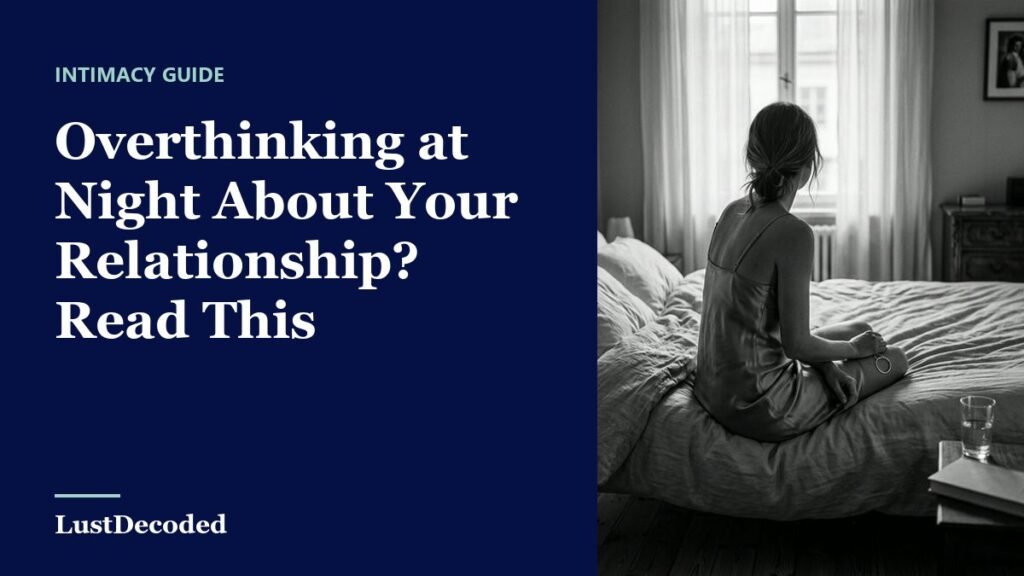
The day was fine. Then you lie down and it starts: What did that message mean? What if they’re losing interest? What if this falls apart? Hours later you’re still awake, replaying the same scenes.
Why your mind loops
Author and meditation teacher Joe Dispenza describes overthinking as a loop: a worried thought switches on the body’s stress response, the stress narrows your focus onto the threat, and that narrow focus produces more worried thoughts. Your body reacts to the imagined scene almost as if it were really happening.
Why “think positive” doesn’t work at 2 a.m.
Trying to argue yourself out of fear while you’re inside it rarely works. The better time to change the pattern is before it starts — in the morning, or as you get ready for bed.
Four steps that help
- Notice and name it: “I’m in the worry loop again.” A thought isn’t a fact.
- Sort it: neuroscientist Andrew Huberman suggests two columns — worries you can’t control, and actions you can. Only the second column deserves your night.
- Slow your breath: a few long exhales tell your body the danger is over (more in our calm-mind lesson).
- Decide in daylight: if something truly needs saying to your partner, plan to say it calmly tomorrow — not at midnight by text.
If overthinking comes from a relationship that keeps you guessing, it may be the hot-and-cold pattern — and that’s worth decoding.
Conclusion
Night-time overthinking is a stress loop that feeds itself. Naming it, sorting worries from actions, slowing your breath and deciding things in daylight quiet it.
What’s the thought that keeps coming back at night? You can answer privately — tell Rupesh on WhatsApp or share it anonymously. No names, no judgement.
Sources & further reading
- Dr. Joe Dispenza — meditation and change
- Andrew Huberman — Huberman Lab (Stanford neuroscience)
- Tele-MANAS — free 24/7 mental-health helpline, Govt. of India (14416)
Talk it through privately with Rupesh Ojha. Your first chat is free, confidential and judgement-free.
LustDecoded offers relationship and intimacy guidance, not medical treatment. For physical or mental-health concerns, please consult a qualified doctor.